



This is for the vehicle and marketing enthusiasts, covering the recent Jaguar Land Rover news.
6 minute read
In April 2025, Jaguar registered just 49 vehicles in Europe, a 97.5% decrease compared with the same month the previous year. Over the first four months of 2025, sales plummeted 75% year-on-year. Figures like these made global headlines and rapidly became central to the broader Jaguar Land Rover news narrative.
This post analyses the recent Jaguar Land Rover news, with a dramatic sales decline and the controversy surrounding its 2024 rebrand. It explains how the company’s ambitious “Reimagine” strategy to position Jaguar as a luxury EV brand backfired due to poor marketing execution, disconnect from loyal customers, and misaligned timing with product availability. Finally, it offers a strategic framework for legacy automotive brands to balance heritage with innovation and synchronise branding with product launches for future success.

In my previous piece on Jaguar Land Rover news marketing, I explored the bold, yet contentious nature of Jaguar’s rebrands, questioning whether it was a leap forward or a misstep. Since then, the Jaguar Land Rover news has continued to unfold in dramatic fashion, forcing the company, its leadership and its marketing strategy into the spotlight once again.
In this long-form review, I’ll unpack recent developments in the Jaguar Land Rover news, assess where the marketing has gone wrong (and yes, where it might be right), and offer insights on how a legacy manufacturer should have approached transformation in a way that honoured both the brand and its customers.
Here’s the underlying narrative in this ongoing Jaguar Land Rover news story: what started as a high-profile attempt to reinvent Jaguar for an electric future has turned into one of the most debated rebrands in automotive history. The fallout has forced shifts in leadership, raised serious questions about marketing strategy, and highlighted the perils of repositioning a storied brand without balancing heritage with innovation.
For decades, Jaguar was synonymous with British performance, elegance and automotive craftsmanship. Its identity was deeply rooted in timeless design and a storied legacy, from the leggy XK series to the iconic E-Type, that engendered passionate loyalty among its core customer bases.
But by the early 2020s, that identity was under strain. Sales had been declining for years, and luxury rivals such as BMW, Mercedes-Benz and Audi continued to grow their market share in both traditional and electric vehicle segments. Jaguar’s leadership, as part of the Tata-owned Jaguar Land Rover group, embarked on an ambitious “Reimagine” strategy aimed at repositioning the marque as a luxury EV brand. This involved not just new products, but an entirely new brand identity and marketing approach.
The intention was clear: the Jaguar Land Rover news and marketing around this pivot would signal a fresh beginning, one that distanced Jaguar from what it had been and repositioned it for what the future of luxury could be. However, execution quickly revealed deep strategic and communicative challenges.
In what initially kickstarted the Jaguar Land Rover news, the manufacturer’s rebrand, unveiled in late 2024, was ambitious in concept but flawed in execution, especially when judged against fundamental marketing principles.
In my opinion one of the most remarkable decisions in the initial campaign was to launch a teaser that did not actually show a car. The campaign leaned heavily into fashion imagery, abstract visuals, high-concept messaging and avant-garde aesthetics, underpinned by slogans like “Copy Nothing” and “Live Vivid” without anchoring those elements to actual vehicles. This was meant to position Jaguar as a lifestyle brand and fuel anticipation for a future electric line up, but many observers felt it lacked clarity about what was being marketed.
For an automotive brand, especially one with a heritage like Jaguar’s, not showing a product defies basic marketing logic. Customers connect with vehicles visually, emotionally and rationally. Without cars in the narrative, the campaign felt untethered to the actual raison d’être of the brand, selling vehicles.
Jaguar’s traditional customers are not only wealthy; they are deeply invested in the brand’s heritage, engineering pedigree and performance ethos. The rebrands visual and tonal shift was perceived by many as a rejection of those values. The campaign felt, to loyalists, as though it was targeting an entirely different audience, one that may not yet have the capacity or intent to purchase a £100,000-plus electric luxury vehicle.
These disconnects, generated widespread confusion and, in many quarters, outright hostility. Social media reaction and commentary from industry figures (including Tesla’s Elon Musk distilling scepticism into “Do you sell cars?”) captured the mood succinctly: the launch had succeeded in shocking the market but not in a way that built desire.
In April 2025, Jaguar registered just 49 vehicles in Europe, a 97.5% decrease compared with the same month the previous year. Over the first four months of 2025, sales plummeted 75% year-on-year. Figures like these made global headlines and rapidly became central to the broader Jaguar Land Rover news narrative.
While these results were widely framed as confirmation of the rebrands failure, the reality is more nuanced. Jaguar deliberately paused sales of its legacy internal combustion models ahead of its transition to EVs, meaning dealerships were largely without product. This created a perfect storm: no cars to sell, and a brand identity that lacked the immediate relevance to drive demand.
But the optics of plummeting sales were disastrous. In marketing, perception is reality, and potential customers read headlines about “sales collapse” far more than nuanced strategy explanations. What the company described as a planned pause was perceived externally as a crisis directly tied to the new brand messaging.
The campaign became a cultural lightning rod. Critics on various media channels, even those outside the automotive industry, labelled the rebrand “woke,” arguing that its imagery and language appeared politically motivated rather than commercially grounded. Some commentary cited falling used-car sales as an indication of declining consumer confidence.
This perception was fuelled, in part, by the shock value of the creative direction and the absence of traditional automotive cues. Whether fair or not, the narrative took hold on social channels, shaping Jaguar Land Rover news coverage and public discourse.
As fallout from the rebrand accelerated, the company began to rectify course behind the scenes.
In late 2025, Jaguar parted ways with Gerry McGovern, the Chief Creative Officer responsible for the design vision underpinning the rebrand and the new Type 00 concept. His abrupt exit after more than two decades with JLR became a headline story in its own right and reinforced perceptions that the campaign had misfired.
McGovern had been an influential figure in guiding Jaguar’s design language for years, having shaped models like the Range Rover Evoque and reinvigorated the Defender line. His departure signals not just a personnel change but a potential recalibration of creative direction at the highest level.
Beyond personnel shake-ups, Jaguar has also reportedly moved to consolidate and refine its marketing resources, with several major agency groups competing for its integrated global account. This suggests a strategic re-focus on developing more commercially aligned campaigns.
Collectively, these changes show a company in flux, reacting to the market and to criticism rather than steering confidently with a long-term, data-informed strategy.
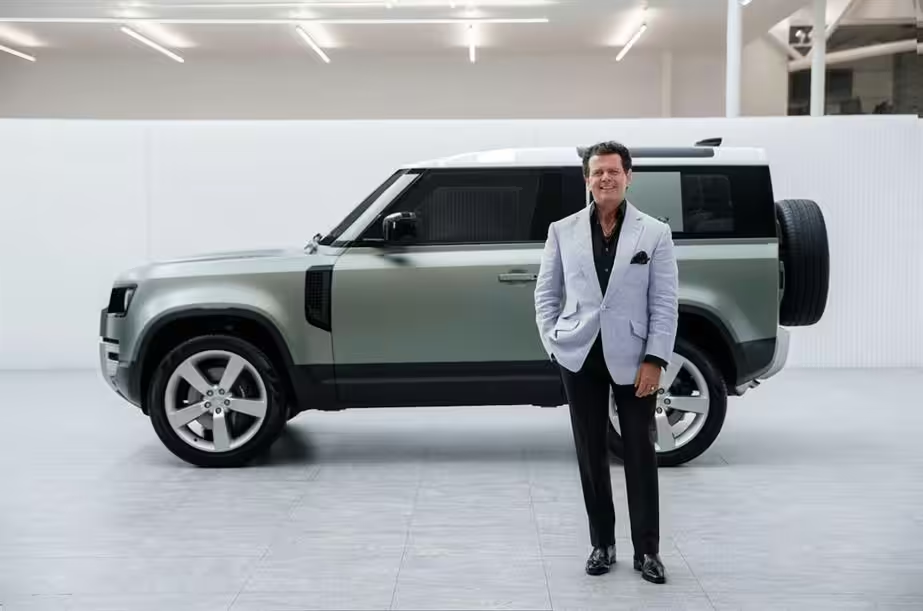
However, we can’t fully blame marketing for Jaguar decline in EV sales. One of the more dramatic and under‑reported elements of the ongoing Jaguar Land Rover news story is the impact of the recent cybersecurity breach on sales performance, separate from (but compounding) issues caused by the rebrand and product transitions.
In late summer 2025, Jaguar Land Rover experienced a major cyberattack that forced the company to shut down its IT systems and halt production across multiple factories for weeks. This wasn’t a minor digital nuisance though; it was classified as one of the most damaging cyber incidents in UK history! The estimated economic losses to the company and wider UK supply chain were in the region of £1.6-2.1 billion.
When the cyber breach struck, Jaguar Land Rover took the decisive but painful step of shutting down its global IT systems to contain the attack. As a result, production at plants in the UK and overseas was paused for more than five weeks. During this time, manufacturing lines were idle, and dealerships struggled to register new cars, which in turn halted deliveries a critical link in the sales funnel. The company reported that wholesale volumes fell by around 24 %, while retail sales dropped about 17 % year‑on‑year in the quarter most affected by the shutdown.
From a commercial perspective, that impact was enormous. A manufacturer’s ability to generate revenue depends on turning production into saleable inventory and delivery, yet Jaguar Land Rover simply couldn’t do that for a sustained period, and at a time when it was already transitioning its product line and grappling with rebrand reception.
The company’s financial reports following the incident underline how deeply the breach affected its bottom line. Jaguar Land Rover posted a pre‑tax loss of £485 million for the period, a dramatic swing from profits of nearly £400 million the previous year. Revenue for the quarter was down about 24 % compared to the prior year, and half‑year sales were around 16 % lower. Jaguar Land Rover confirmed that the cyber incident was a major driver of these results, alongside planned model wind‑downs and external market pressures like US tariffs.
This wasn’t just about a short pause in production. When systems were down, the entire sales pipeline slowed: vehicles couldn’t be registered with authorities, orders couldn’t be processed, logistics stalled and dealer networks were left with uncertainty about delivery timelines. This resulted in a slump in both customer demand and wholesale commitments.
Beyond Jaguar Land Rover itself, thousands of suppliers and dealers felt the effects. Many parts manufacturers and logistics partners rely on JLR’s systems to manage orders, process invoices and plan production schedules. With these systems offline, suppliers faced cash‑flow headaches and lost sales, a scenario that magnifies the economic impact of the breach beyond the headline figures.
In summary, while the dramatic drop in sales reported in the Jaguar Land Rover news has been partly attributed to the controversial rebrand and the winding down of older Jaguar models, the cybersecurity breach played a significant and distinct role in disrupting production, stalling deliveries and depressing sales figures. Locking down IT systems to mitigate cyber risk was a necessary move, but it came at the cost of market momentum and commercial performance at a time when the company could least afford it.
Despite missteps in the Jaguar Land Rover news, there are elements of strategy that deserve recognition.
Jaguar’s intent to reposition itself as a luxury EV brand before many competitors is bold. In theory, defining a clear future identity years ahead of product launch can deliver first-mover advantage in the electric luxury segment, provided that audience expectations and product readiness align.
The “Reimagine” strategy embraces sustainability, modern design and a lifestyle orientation, forward-thinking themes that could resonate once the vehicles are actually in customers’ hands.
From an earned media perspective, Jaguar achieved something few automotive brands can: universal visibility. The campaign was talked about in boardrooms and social feeds around the world, if not always positively. This kind of attention can work for a brand if it is properly managed, made relevant through product and experience, and not allowed to overshadow commercial goals.
Here’s where I believe Jaguar could, and should, have thought differently.
A rebrand of this scale should ideally align with the availability of compelling product. Jaguar effectively removed itself from the market by pausing legacy sales before the next generation of EVs were ready. Many of the dramatic drops in sales reported in Jaguar Land Rover are attributable not to messaging alone, but to a lack of vehicles to buy.
In contrast, a phased approach, where new branding, marketing and product launch happen in tandem, preserves continuity, keeps existing customers engaged and creates tangible reasons for prospects to care.
Jaguar’s identity is a valuable asset. A brand with decades of heritage must evolve with its roots, not abandon them wholesale. Creativity and cultural engagement are crucial in luxury marketing, but not at the expense of brand coherence. The “Copy Nothing” tagline was conceptually intriguing, yet its application risked severing emotional connection with core audiences before establishing relevance with new ones.
Rather than erasing legacy symbols, a more strategic reinterpretation that integrates heritage and modernity could have provided continuity while signalling transformation.
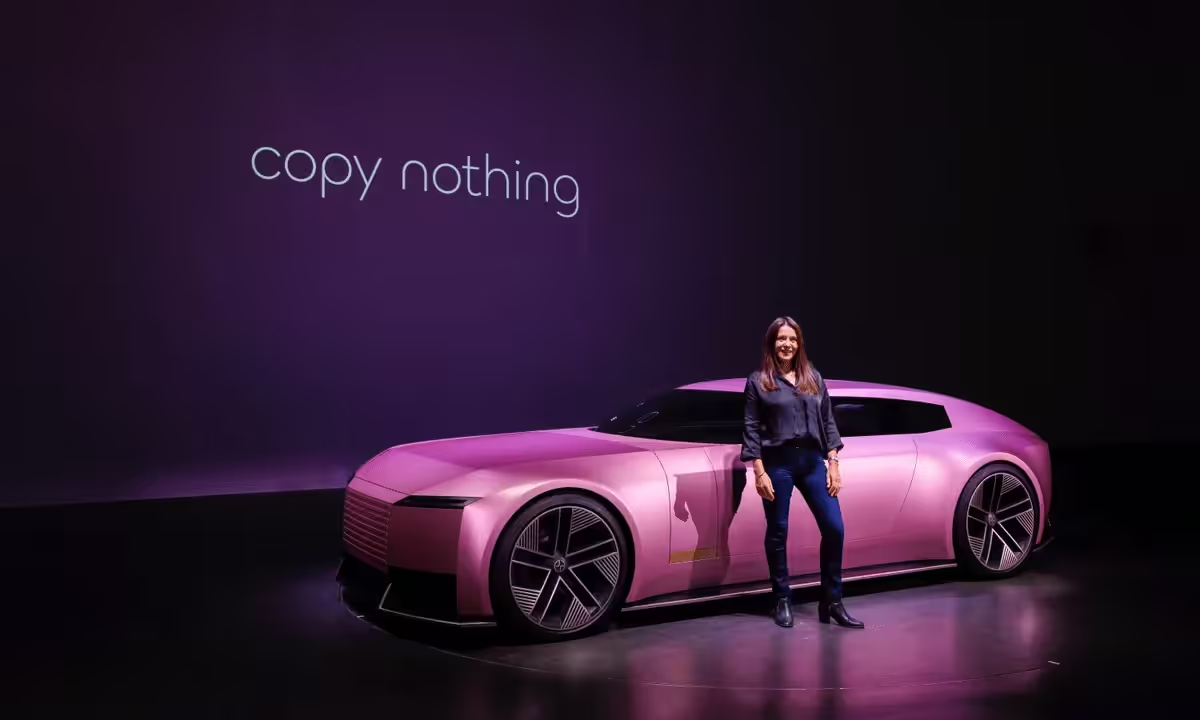
At the heart of the rebrands communications was art and attitude, but not a clear value proposition. Successful luxury repositioning doesn’t just tell a story it tells customers why they should care, what unique value they will derive, and why the brand is worth their investment.
This was missing in the early narrative of Jaguar’s repositioning, and that’s where the disconnect between buzz and business began.
If I were advising Jaguar (or any legacy automotive brand) on a future pivot of this magnitude, here’s a strategic framework they could have adopted:
Ensure new brand messaging and identity launches with products that embody that promise in the market.
A repositioning that aims to attract new buyers cannot alienate existing loyalists. Segment campaigns so that each group sees relevance and value.
Use legacy not as an anchor that holds back progress, but as a springboard that gives credibility to innovation.
Track not just impressions and views but sentiment, intent and purchase consideration. Pivot creative approaches in real time.
Brand identity must align with dealership experience, product availability and ownership journey, not live in an isolated campaign bubble.

Warren Albutt is a seasoned marketing strategist with a deep passion for automotive branding and transformation, hence the focus on the Jaguar Land Rover news.
With extensive experience analysing market trends and crafting strategies for legacy brands, Warren specialises in helping companies navigate the delicate balance between heritage and innovation. His insights focus on aligning bold creative vision with commercial realities, ensuring that brand storytelling resonates with both loyal customers and new audiences in an era of rapid technological change.
The Jaguar Land Rover news cycle around this rebrand tells a story of ambition, risk and learning, and perhaps a cautionary tale for all legacy brands in transition. Bold creative thinking is essential, especially as the automotive industry accelerates toward electrification and new forms of luxury expression. But strategic grounding, customer insight and product alignment are equally indispensable.
Jaguar’s journey isn’t over. The first all-electric Jaguar models are poised to hit the market soon, and how they’re marketed, in harmony with a redefined brand identity that respects both product and customer, will be the ultimate test of whether bold ambition can translate into marketplace success.
Then, hopefully, there will be more positive Jaguar Land Rover news on the horizon.
Much of the reported sales plunge stems from the pause in legacy model sales ahead of the electric transition, leaving dealerships without new cars to sell, compounded by mixed reactions to the brand’s marketing direction.
The term “woke” became associated with the campaign largely through social media and commentary rather than corporate messaging. Critics used it to describe the creative execution, but Jaguar’s leadership has denied pursuing any political agenda, framing the campaign as a strategic repositioning instead.
Gerry McGovern was Jaguar Land Rover’s Chief Creative Officer, a long-serving design leader credited with shaping some of JLR’s most successful models. His departure amid the rebrand controversy signals a leadership shift and potential reorientation of design and marketing strategy.
The brand should synchronise its identity shift with product launches, engage both legacy and new customer segments, and craft messaging that balances heritage with innovation, effectively building a narrative that resonates commercially as well as creatively.
Success will depend on product performance, pricing, availability and how marketing connects the brand’s new identity with customer aspirations. A strong value narrative and strategic rollout could yet turn the tide in Jaguar’s favour.