




A powerful website is more than just digital wallpaper – it is your best salesperson, and you don’t have to allow for personal time off (PTO), annual leave (AL), or sick days.
A well-designed website can be the difference between a thriving business and one that struggles to convert visitors into paying customers.
For manufacturers, where competition is fierce and products complex, your website needs to be clear, confident, and conversion-focused. At M4M, we have broken down how web design influences your bottom line so you can turn browsers into buyers.
Did you know that research shows users decide whether to stay on a site or leave within 0.05 seconds? That is barely enough time to blink, let alone scan your product list or understand and digest all the benefits of partnering with you.
Consequently, it is imperative that your website does not look outdated, cluttered or unprofessional. You need an appealing design; one that conveys credibility and professionalism. You should aim for a homepage that clearly, loudly, and proudly showcases your brand, values, and products. You want them to stay on the website longer, think “They are the real deal”, and, ideally, engage and enquire.
Fact: Studies show that 94% of first impressions are related to design!
Okay, yes, first impressions matter. But we all know that looks are not everything. An effective website design does not just look good – it works hard behind the scenes. It creates an intuitive, engaging user experience that simplifies decision-making and showcases what you do best.
For manufacturers, that means designing with purpose: clarity, speed, knowledge, and trust.

An effective design impacts sales, but how?
UX, also known as user experience, is critical for turning browsers into buyers. Good UX is like the water mains for a city. When it’s working, everyone enjoys an uninterrupted water supply without paying attention to the details; however, when there is an issue, there is a BIG issue.
If your website is difficult to navigate or loads slowly, users will likely abandon it. This is particularly true for complex manufacturing products that may require more information before a purchase decision. Here are some key UX elements to consider:
Ensure your website is easy to navigate, with clear categories and a straightforward menu. This allows users to find information quickly, reducing frustration and enhancing the likelihood of conversion.
With increasing numbers of users accessing websites via mobile devices, having a mobile-responsive design is non-negotiable. A mobile-friendly site improves accessibility and ensures potential customers can interact with your content on any device.
Knowing that the decision to stay on a website is made within milliseconds, it would be counterproductive for the website not to load just as fast. Visitors may leave the website before seeing the contents if it does not load properly.
Fact: Conversion rates can jump by 200-400% with strong UX and interface design!
Manufacturing products can often be technical and complex. High-quality images, videos, and infographics can simplify these concepts for your audience – for example, our portfolio page. Visuals will enhance engagement and play a significant role in conveying your brand’s story.
Fact: Content with relevant images gets 94% more views than content without images.
Your website should guide your visitors through a journey, and the end stop should be an actionable task: “Request a quote”, “Download the brochure”, “Call now”, etc.
Clear and compelling calls to action are essential for directing potential customers through the buying process. They should be impossible to miss, easy to act on, and be strategically placed throughout your site.
Fact: Websites with compelling CTAs can improve conversion rates by 120%.
In the manufacturing sector, precision, reliability, and accuracy are of the utmost importance. You need to instil thought leadership with every scroll. There are trust signals you can implement in your website to build that relationship based on trust and a mutual understanding that you are the expert in the subject matter.
Fact:79% of people won’t buy from a site they don’t trust.
A beautiful website is useless if potential customers can’t find it. Effective website design must also incorporate search engine optimisation (SEO) strategies. This includes optimising page load speeds, using appropriate keywords, and ensuring your site structure supports search engine crawlers.
For manufacturers, keywords such as “websites for manufacturers” can help drive targeted traffic to your site.
Fact: 70% of marketers say SEO beats PPC for long-term sales.
Every click someone makes, every time someone leaves a website within a set timeframe, every time someone submits a form or downloads a brochure… it tells a story. Studying these stories and leveraging analytics tools can help you understand user behaviour on your website and find what is working and what is not.
However, continuous testing and optimisation are key; small changes can significantly impact sales over time.
Fact: Companies that use data well are 5x more likely to make smart business decisions.
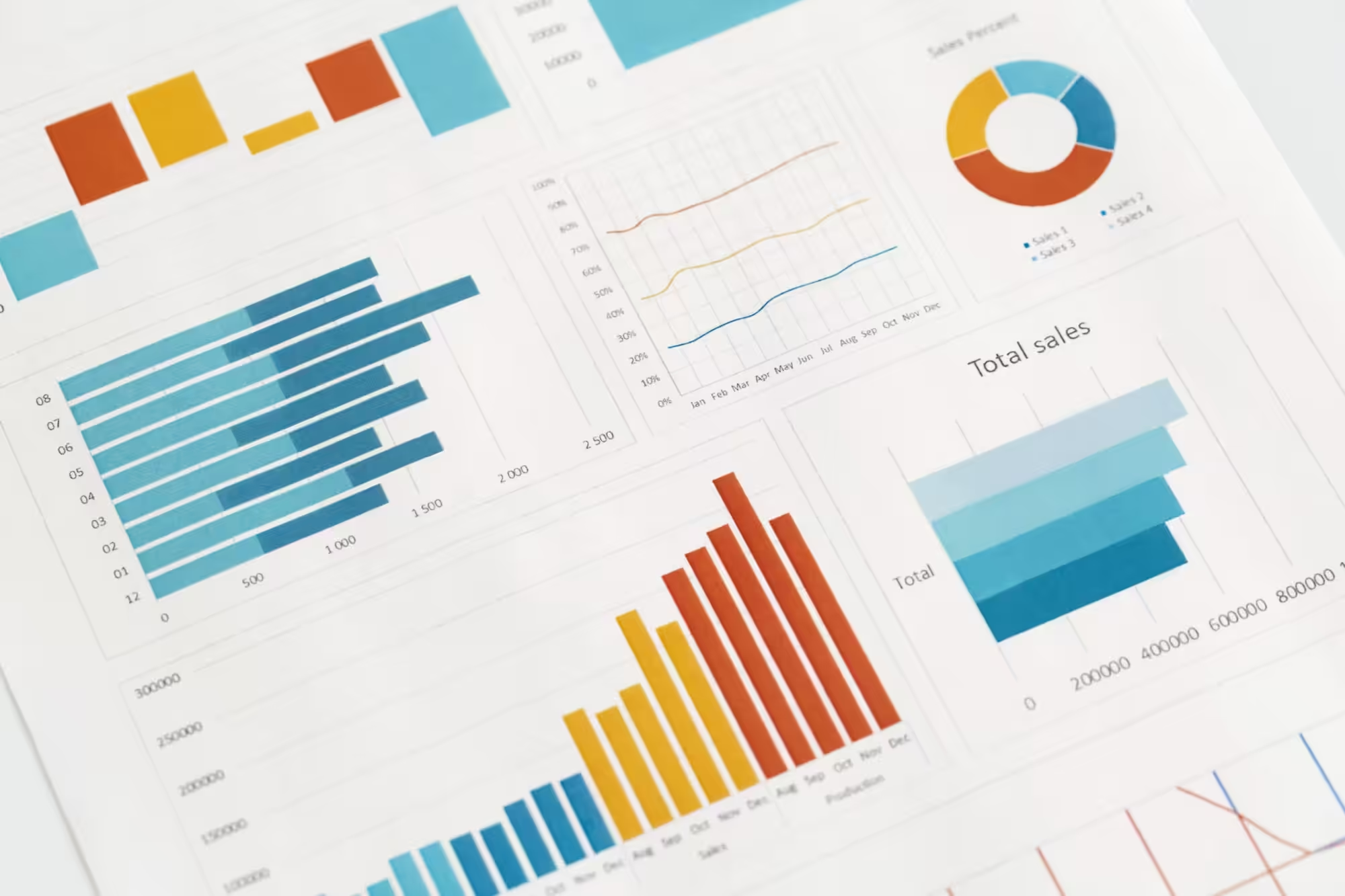
Like a high street storefront, your website is the first thing a potential customer will see in the digital landscape. Therefore, the design of your website plays a critical role in driving sales and increasing your return on investment. The website needs to work as hard as you do.
It is not a one-time project. It is a powerful tool to educate, showcase, and profit from. Invest in it. Optimise it. Improve it.
Whether you are starting up, want a new website, or want a fresh revamp, contact us today! We will help you turn your website into your hardest-working asset.
Start today, and watch your sales soar tomorrow!
The design of your website is the first thing a potential customer will see, and a sleek, clean, modern design significantly impacts first impressions, as users often judge a site’s credibility within seconds.
Fact: 75% of users admit to making judgments about a company’s credibility based on its website design.
Manufacturing sites need to make complexity feel simple. When people can find what they need quickly, they’re far more likely to get in touch.
Focus on:
Fact: 88% of online consumers are less likely to return to a site after a bad experience.
Industrial or manufacturing products don’t always sell themselves with words alone. High-quality visuals, such as product images and demonstration videos help simplify complex products and enhance user engagement. They allow potential customers to understand product features better, which can influence their purchasing decisions.
Fact: Visual content is 40 times more likely to be shared on social media than other types of content.
Yes, yes, and 100% yes. Tell people what to do. Tell them often, and loudly, and confidently. Calls to action are critical for guiding users towards specific actions. Well-placed and compelling CTAs help direct potential customers through the buying process, increasing the chances of conversion.
Fact: Using a single call to action can increase conversion rates by up to 371%.
Good SEO means more of the right people find you online. If people cannot find your site because it is not showing up in search results, the profits won’t show up in your sales figures either.
Start by:
Statistic: 53% of mobile users abandon a site if it takes more than three seconds to load.
For further information on how Marketing for Manufacturing can design, develop and manage your manufacturing website, email us at info@s2fmarketing.co.uk or call us on 0121 607 1908.