



Learning how to monitor marketing ROI is one of the most important measures of success in modern business.
I’m Warren Albutt, Managing Director of Marketing For Manufacturing (M4M), and over the last three decades I’ve worked with hundreds of manufacturers across the UK. And in my experience, one truth stands out: the businesses that know how to monitor marketing ROI outperform those that don’t.
When ROI is measured accurately, marketing moves from being seen as a cost centre to being understood as a powerful driver of leads, sales, and long-term growth. For manufacturers in particular — where margins can be tight and sales cycles are long — understanding ROI is vital.
Discovering how to monitor marketing ROI is a best practice, but it’s also a proven driver of performance.
The message is clear: when you discover how to monitor marketing ROI, you don’t just prove the value of marketing, but you actively improve it.
In manufacturing, decisions are rightly made on evidence. Far too often, marketing is left out of this discipline. Campaigns are run, catalogues are printed, stands are booked at trade shows, but nobody tracks which of these efforts deliver real return.
By focusing on how to monitor marketing ROI, manufacturers can:
As a benchmark, a 5:1 ROI (every £1 spent generating £5 revenue) is strong. A 10:1 return is exceptional. In manufacturing, where order values can be high, a single converted lead can tip the balance.
Without clarity, ROI cannot be measured. Broad goals like “increase leads” are too vague. Manufacturers need specific, measurable objectives. For example:
From here, KPIs can be tracked, cost per lead, enquiry-to-order conversion rate, and contribution to the sales pipeline. This transforms marketing from a loose activity into an accountable process.
Manufacturing sales often involve multiple touchpoints: a prospect sees your stand at a trade show, downloads a datasheet from your website, speaks to a distributor, and finally visits your factory before placing an order.
When learning how to monitor marketing ROI in these cases, attribution models matter:
For most manufacturers, multi-touch attribution is the most practical way to connect marketing with sales outcomes.
The calculation is straightforward:
ROI (%) = (Revenue generated from marketing – Marketing spend) / Marketing spend x 100
The challenge is accuracy. Manufacturers often underestimate marketing costs by excluding staff time, sample production, or stand builds. Others fail to connect deals back to the marketing campaign that initiated the opportunity.
For example, if a £30,000 order closes six months after an enquiry made at an exhibition, the ROI belongs to that marketing activity, even if the sales process took time.
Unlike retail, manufacturing ROI does not appear overnight. A buyer considering a six-figure piece of equipment may take months, even years, to make a decision.
Manufacturers should track ROI by:
This approach ensures ROI is measured over the full buying cycle, not prematurely dismissed.
When looking at how to monitor marketing ROI, it is not only about reporting past performance, but also about shaping the future.
Armed with this insight, budgets can be reallocated to the channels that truly perform.
Manufacturers often focus solely on direct revenue. But soft metrics matter too. Brand credibility, awareness in new markets, and stronger distributor relationships all play a role in long-term ROI.
For example, research shows that companies investing in consistent brand building see a 23% higher average return over time. If your brand becomes the recognised choice in aerospace or automotive supply chains, revenue follows naturally.
When learning how to monitor marketing ROI effectively, manufacturers must move beyond spreadsheets. Reliable systems connect sales and marketing:
Best practice is to review campaigns monthly, refine quarterly, and use annual reviews for major budget decisions.
A manufacturer spends £20,000 exhibiting at MACH. They capture 150 leads, 30 become qualified, and 8 convert into orders worth £200,000.
ROI = (200,000 – 20,000) ÷ 20,000 = 900%
£10,000 is invested in designing and distributing a new catalogue. 50 enquiries result, leading to £40,000 in new orders.
ROI = (40,000 – 10,000) ÷ 10,000 = 300%
£5,000 is spent on co-branded ads with a distributor. 12 new opportunities arise, worth £60,000.
ROI = (60,000 – 5,000) ÷ 5,000 = 1,100%
These examples show the value of accurate monitoring. Without measurement, many manufacturers assume activities “work.” With measurement, they know precisely which ones deliver growth.
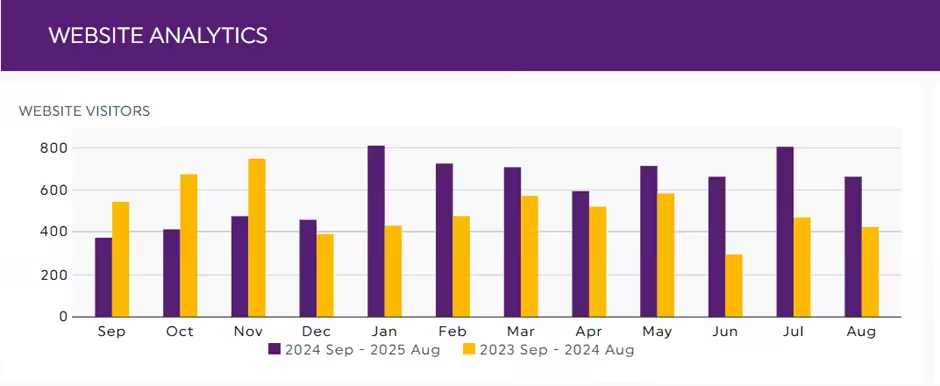
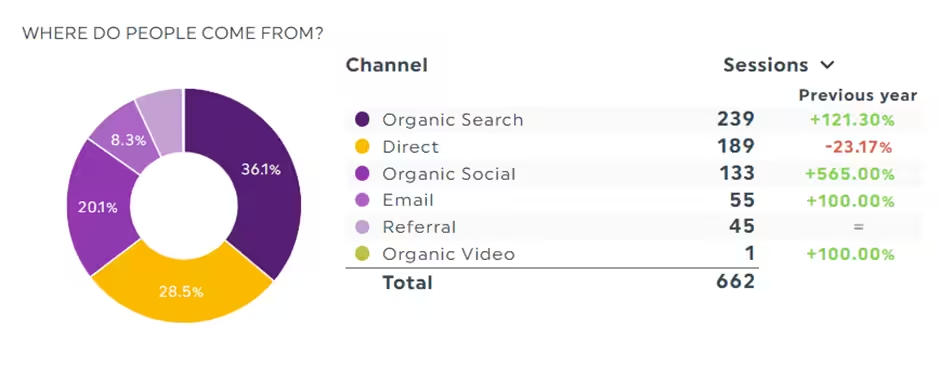
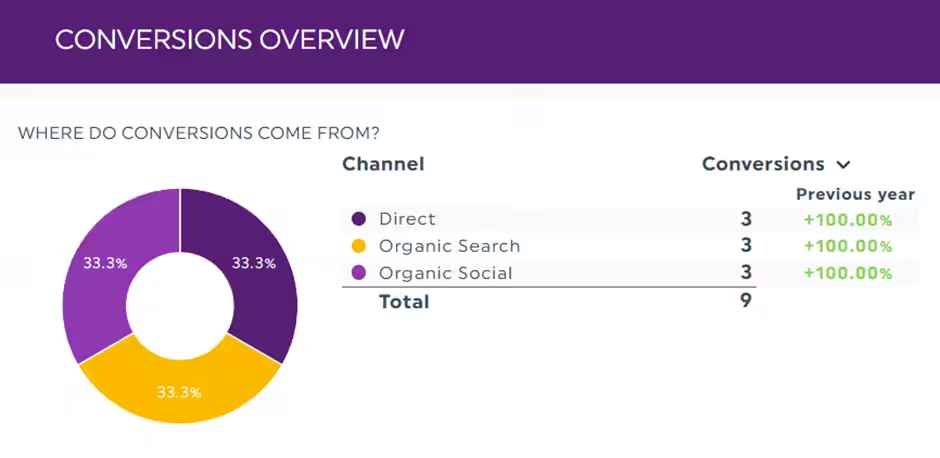
At Marketing for Manufacturing (M4M), we give clients complete visibility of their performance. Our monitoring platform provides a personalised dashboard, available 24/7, so you can see exactly how campaigns are performing at any moment, whether it’s website traffic, leads generated, or ROI from a trade show.
Combined with S2F Connect, which links sales and marketing data from LinkedIn seamlessly, manufacturers can gain a single source of truth. This means no more waiting for monthly reports or relying on guesswork; just clear, up-to-date insights that put you in control of your marketing investment.
One of the most important methods of how to monitor marketing ROI is campaign monitoring. Campaign ROI should be tracked monthly, with quarterly reviews for trends. Trade shows and catalogue ROI often require annual review due to long buying cycles.
A 5:1 return is solid. In manufacturing, where order values can be high, ROI can exceed 10:1 if campaigns are well targeted.
Yes. Brand awareness, credibility, and distributor loyalty directly affect long-term sales. Ignoring them underestimates the true impact of marketing.
Multi-touch attribution is most effective for complex sales cycles, as it credits trade shows, website interactions, and distributor involvement together.
Failing to connect closed orders back to the original lead source. Without learning how to monitor marketing ROI, the value of trade shows, catalogues, or online campaigns is often underestimated.

Warren Albutt — Managing Director, M4M
Founder of leading Birmingham marketing agency
Warren Albutt is Managing Director of Marketing For Manufacturing (M4M). With nearly 30 years of experience in manufacturing and B2B marketing, Warren has built his career on making marketing measurable. His specialism is showing manufacturers how to monitor marketing ROI so that investment decisions are based on evidence, not guesswork. Known for his clear, authoritative approach, Warren helps manufacturers across the UK turn marketing into a proven engine for growth.
Other articles:
Why M4M, THE digital Birmingham marketing agency, is your creative powerhouse to marketing success
Digital marketing for manufacturers: why it matters more than ever
The ultimate guide to successful marketing to the defence sector