




We are at a turning point in UK defence and industry. The United Kingdom is undergoing a seismic shift in its defence and industrial strategy.
With global threats mounting and geopolitical uncertainty rising, the UK government has committed to a significant increase in defence spending. By 2027, the target is to allocate 2.5% of GDP to defence, with a longer-term aspiration of reaching 3% in the early 2030s. This represents the most substantial investment in the UK’s military capabilities since the Cold War and it’s not just a strategic manoeuvre for national security. It’s a catalyst for economic revival, industrial growth, and technological innovation.
For UK manufacturers, particularly those in or adjacent to defence, this is a defining moment. However, capitalising on these opportunities requires more than operational capability — it demands strategic positioning, public credibility, and highly targeted marketing. This guide explores how manufacturers can seize the moment through smart, ethical and effective marketing to the defence sector.
The surge in defence spending isn’t just about tanks and missiles. It’s part of a broader vision to reinvigorate British manufacturing and reduce dependence on foreign suppliers. This national rearmament programme includes:
This reinvestment strengthens defence readiness while also offering economic dividends. It creates demand for everything from advanced composites and electronic components to logistics, testing, and cybersecurity. Marketing to the defence sector must be added to your budget for the next few years as government spending increases.
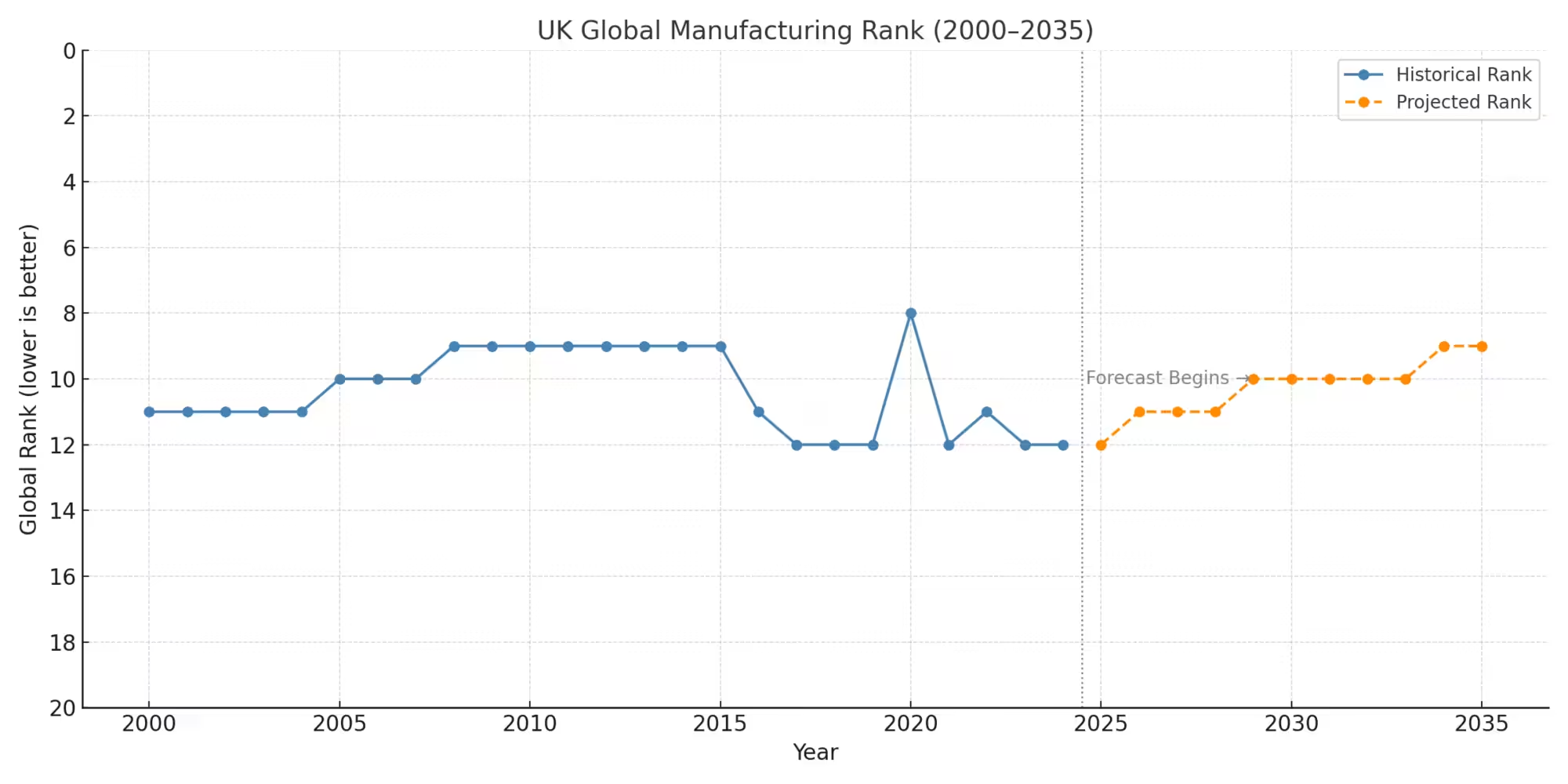
The UK’s recent industrial trajectory suggests a decisive shift: with the current 12th global ranking in manufacturing, the strategic boosts to defence spending could propel it back into the top 10, and possibly to 9th, within the next decade.
1. Ambitious defence budget uplift
2. Industrial scale-up and new facilities
3. Regional and economic impact
| Factor | Impact on manufacturing rank |
| Large and sustained capex | Defence capex boosts output in high-value manufacturing (naval, aerospace, munitions). |
| New and upgraded facilities | Increases domestic capacity, which should result in more output, jobs and supply chain opportunities. |
| Regional diversification | Broader industrial base reduces dependence on sluggish sectors. |
| Dual-use innovation | Spillovers from AI, chips, and advanced R&D lift overall manufacturing performance. |
| Export wins | UK is the 7th largest global defence exporter, with a third of product revenue from overseas |
Expected outcome
The future of UK manufacturing to the defence sector
The intersection of increased defence spending, new manufacturing infrastructure, export momentum, and innovation offers a clear path for the UK to ascend from 12th to around 9th in global manufacturing. This isn’t just aspirational; it’s a data-backed projection rooted in strategic, regionally diverse investments already underway.
If your business serves aerospace, advanced engineering, electronics, software, or specialist materials, now is the time to reassess you’re positioning. Even companies not traditionally in defence may find adjacent opportunities through diversification or partnerships.
The modern defence sector is complex, scrutinised and competitive.
Marketing to the defence sector is unlike any other B2B environment. It’s highly regulated, deeply technical, politically sensitive, and increasingly under public scrutiny.
In recent years, protests have erupted outside British defence factories, including those linked to arms shipments to global conflict zones. Campaigners have targeted not only weapons manufacturers, but also logistics providers, component suppliers, and software developers associated with defence contracts. This means that any company working in this space must be prepared to navigate ethical concerns and reputational risks.
Each of these buyers has rigorous procurement processes, often requiring certifications, evidence of financial and ethical compliance, and robust information security standards (e.g., Cyber Essentials, ISO 27001).
Strategic marketing to the defence sector is a multi-layered approach. To compete in this high-stakes environment, manufacturers must adopt a tailored, multi-channel marketing strategy that addresses technical credentials, regulatory awareness, and value-driven partnerships. Here’s how to do it:
Defence buyers don’t respond to fluff. They want to see evidence.
Example: A manufacturer of aerospace-grade fasteners can publish a whitepaper explaining how their materials perform under extreme heat and vibration — relevant for defence aviation or submarine environments.
In a sector often marred by public scepticism, transparency is a marketing superpower.
Exhibitions, trade shows, and defence symposia remain essential to marketing to the defence sector.
Key events include:
Use these events not just for exhibition, but for thought leadership — host talks, sponsor panels, and publish insights pre- and post-event.
Plan three months ahead of each event. Develop pre-show content (blogs, emails, LinkedIn), launch a targeted digital campaign during the show, and follow up with segmented content for leads gathered.
Digital platforms are increasingly influential in B2B procurement, and the defence sector is no exception.
Website optimisation for the defence buyer:
LinkedIn Targeting:
Email Campaigns:

Search engine optimisation (SEO) may not be the first tactic that comes to mind when thinking about defence procurement, but it’s an increasingly vital tool in reaching the right decision-makers, even in this highly specialised and regulated industry.
Although many contracts are awarded through formal tenders and direct relationships, a significant number of procurement officers, engineers, and project managers begin their supplier research online. Whether they’re looking for defence-grade materials, testing services, or secure software systems, their search often starts with Google or a specialist defence directory.
By optimising your digital presence, you increase your visibility during the early stages of this decision-making process — before an RFQ is even issued.
Targeting the right keywords is essential. These aren’t your average B2B terms, they should reflect the specific language used by defence stakeholders. Examples include:
A well-optimised website ensures you show up in searches when decision-makers are actively looking for suppliers, even if you’re not yet on their radar.
Don’t just optimise for broad search terms, think about intent. For example, “secure communication systems for defence contracts” or “UK manufacturer for MoD supply chain” show higher buyer readiness and are more likely to convert.
Unlike paid advertising, SEO builds momentum over time. The more high-quality, relevant content you publish, the stronger your authority in search rankings becomes putting you ahead of competitors when critical defence contract research begins.
In other words, start now.
This will be a race between manufacturers across the globe to be high on the procurement and trusted supplier list, make sure you’re ahead of your competition.
Don’t ignore public sentiment! Public trust is a critical dimension of marketing to the defence sector. While government contracts bring prestige and financial reward, they also expose companies to reputational risk. Avoiding these pitfalls requires clear messaging:
Proactive PR:
Corporate Social Responsibility (CSR):
Example: If you manufacture drone components, publish a piece about how similar technologies are used in search-and-rescue or environmental monitoring.
The defence sector values joined-up thinking. Working with others not only helps share expertise and risk; it also improves market visibility.
Strategies for Partnership Marketing:
Co-branded campaigns or joint exhibition stands with trusted partners can give smaller manufacturers greater credibility.
What marketers should know is that marketing to the defence sector isn’t just about winning business, but about unlocking resources to grow your capability. Staying informed about funding streams and innovation grants can help you build compelling business cases for investment.
Key sources:
Knowing what’s available allows you to position your business as forward-looking, well-funded, and scalable. Marketing angles such as “Supported by DASA” or “Part of an Innovate UK-funded project” will give you an instant credibility badge in defence circles.
The long game must be relationship-building, NOT transactional selling
In the defence sector, deals often take 12–24 months to mature. Marketing needs to reflect this reality by focusing on relationship-building rather than hard-sell tactics.
Map your touchpoints across the buyer journey. Use a CRM system to track engagement and adjust campaigns accordingly.
The UK’s defence budget surge presents a once-in-a-generation opportunity for British manufacturers but seizing it will require more than factory capacity or engineering talent. It demands strategic, consistent, and transparent marketing to the defence sector.
Companies that position themselves correctly now will not only win contracts, but also contribute to national resilience, technological progress and economic regeneration.
Marketing to the defence sector isn’t about selling weapons — it’s about earning trust, showcasing innovation, and aligning with national priorities. Get it right, and you won’t just grow your order book, but you’ll be part of growing and shaping the future of UK manufacturing industry.
If you’re serious about improving performance in this complex market, understanding strategy alone isn’t enough — execution starts with precision. That’s where determining how to segment defence buyers becomes critical.
Defence marketing only works when you clearly distinguish between military branches, MOD procurement frameworks and prime contractor supply chains. Without segmentation, even the strongest messaging risks missing the mark.
If you want a practical, step-by-step guide to identifying and prioritising the right defence audiences, our in-depth article on how to segment defence buyers breaks down exactly how to structure your targeting for maximum impact.
If you are unsure where to start, audit your current marketing through the lens of a defence buyer.
Does your website speak their language? Are you visible at relevant events? Are your capabilities clearly articulated? Begin with these fundamentals — and build from there.
For more tips on marketing to the defence sector, please follow us on LinkedIn, or get in touch via our website.
Marketing to the defence sector involves longer procurement cycles, stricter regulatory compliance, and higher scrutiny from both public and political stakeholders. Buyers (such as the Ministry of Defence or Tier 1 contractors) require evidence of technical competency, certifications, and security standards — not just persuasive sales language. Relationship-building, trust, and reputation play a much larger role than in standard B2B marketing.
Start by identifying where your current capabilities align with defence needs (e.g., precision engineering, composites, electronics). Join relevant industry associations like Make UK Defence or ADS Group and attend sector events such as DSEI or Farnborough Airshow. Achieving certifications (e.g., Cyber Essentials, AS9100) and collaborating with established suppliers can also help smaller firms gain entry and visibility.
LinkedIn is particularly effective for targeting roles like procurement officers, engineers and contract managers. Your website should also be optimised for keywords such as “UK defence supplier” or “military-grade manufacturing”. Email campaigns and gated content (e.g., whitepapers, capability guides) can nurture leads over long sales cycles. Digital trust signals — like industry accreditations and case studies — are essential.
Be transparent about your operations and values. Share how your technology contributes to national security, peacekeeping, and innovation. Include ethical policies and CSR initiatives in your communications. Proactively engage in public discussions with facts and compassion, rather than hiding from criticism — trust is earned through openness, especially in a scrutinised industry.
Yes. Funding bodies like DASA (Defence and Security Accelerator), Innovate UK, and regional Local Enterprise Partnerships (LEPs) provide grants for innovation and capability development. Marketing these funded projects can enhance credibility. Co-branding with universities or tech centres involved in the project can also amplify your visibility and authority.
Note: Many of these facts and figures have been taken directly from online sources and AI platforms.